
There is no widely documented celebrity or public figure named Leigh Webber with a confirmed, published net worth estimate. The search most likely points to one of three distinct people or entities: the Charleston-based underwater portrait photographer behind the DIVE IN brand, the Australian treasure hunter associated with the Bondi Treasure Hunter channel, or the fictional General Hospital character from the Webber family storyline. None of these are the same person, and none have a publicly verified net worth figure on record. That means any number you find on a celebrity net worth aggregator for this name is either misattributed, fabricated, or extremely low-confidence.
Leigh Webber Net Worth: Real Person or General Hospital?

Marcus Rothstein
9 Jun 2026

Which Leigh Webber are we actually talking about?

This is the most important question to answer before any net worth discussion. The name 'Leigh Webber' matches at least three distinct identities in publicly available records, and mixing them up produces completely useless financial estimates.
- Leigh Webber (Charleston, SC, USA): A fine art photographer and entrepreneur who studied at the Savannah College of Art and Design from 1993 to 1997 and runs a luxury underwater portrait business called DIVE IN. She operates in high-end markets including Charleston, St. Barths, the Hamptons, and Harbour Island. This is a real, verifiable private individual.
- Leigh Joseph Webber / Bondi Treasure Hunter: A separate real-world identity linked to a European Union trademark filing for 'BONDI TREASURE HUNTER' and covered by WIRED as someone who does treasure hunting for a living via an online channel. Also a real private individual.
- The General Hospital 'Webber' family: A fictional character family on the ABC soap opera. The most prominent 'Webber' connected to dramatic storylines is Heather Webber, a fictional antagonist portrayed by actress Robin Mattson (and later Alley Mills). There is no character explicitly named 'Leigh Webber' with a major documented presence in available records. Fictional characters do not have real net worths.
- Jennifer Leigh Webber: A California Bar licensee (license suspended as of available records) whose name matches the search string. Likely not the intended target of this search, but worth flagging as another disambiguation case.
For this article, the most search-relevant real person is the photographer and DIVE IN entrepreneur based in Charleston. The Bondi Treasure Hunter identity is a secondary real-world candidate. If you arrived here looking for a General Hospital character, the short version is that fictional characters have no actual assets or liabilities, and any 'net worth' figure for them is purely speculative narrative extrapolation, not a financial estimate.
What 'net worth' actually means and how estimates get made
Net worth is a simple formula: Assets minus Liabilities. That means everything you own (cash, property, investments, business equity, intellectual property) minus everything you owe (mortgages, loans, credit card balances, tax liabilities). Fidelity, NerdWallet, and every credible financial institution define it the same way. The number only becomes meaningful when it is grounded in real data about what someone actually owns and owes.
For celebrities and public figures with major media profiles, outlets like Forbes use SEC filings, property records, court documents, deal coverage, and compensation disclosures to build estimates. blank" rel="noopener noreferrer">Bloomberg's methodology explicitly supports assumptions with outside documentation and research. Sites like Celebrity Net Worth use what they describe as a proprietary algorithm, but the New York Times has noted the site employs no computer scientists, and their figures are widely understood to be blank" rel="noopener noreferrer">low-rigor ballpark estimates rather than documented valuations. For private individuals like the Leigh Webber who runs DIVE IN, none of these data inputs are publicly available at all.
The best available net worth estimate and confidence level
For the DIVE IN photographer Leigh Webber: no publicly available net worth figure exists, and any attempt to estimate one runs immediately into the private-individual problem. Because the name can be mixed up with other people who are unrelated, searching for Alli Webb net worth may pull up inaccurate results that do not match Leigh Webber.
She is not a public company, has not disclosed financials in any traceable public forum, and does not appear to have significant press coverage of her personal wealth. Luxury underwater photography is a niche, high-end business, but luxury service businesses run by a single operator typically generate solid professional income rather than the kind of scalable wealth that shows up on net worth trackers.
A rough professional estimate for a successful boutique luxury photography business operator with 25-plus years of experience and a premium brand serving markets like St. Barths and the Hamptons might put personal net worth somewhere in the range of low to mid six figures, possibly reaching seven figures if she has accumulated real estate or business equity over time. That estimate carries very low confidence and is based on industry context, not any documented financial data.
For the Bondi Treasure Hunter identity: similarly, no personal financial statement exists in public records. YouTube and social media content creators in niche categories with dedicated audiences can earn meaningful advertising revenue and merchandise income, but without subscriber counts, brand deal disclosures, or trademark licensing revenue figures, any estimate is pure speculation. Confidence level: very low.
For the General Hospital Webber family: fictional characters have no actual net worth. You can infer story-context wealth from narrative details (how a character lives, what resources they seem to command), but this is creative interpretation, not financial analysis. Robin Mattson, the actress who portrayed Heather Webber for many years, is the real person whose earnings from General Hospital could theoretically be estimated, but that is a separate question about an actress's career earnings, not about 'Leigh Webber.'
Income sources and career earnings context
For the DIVE IN photographer
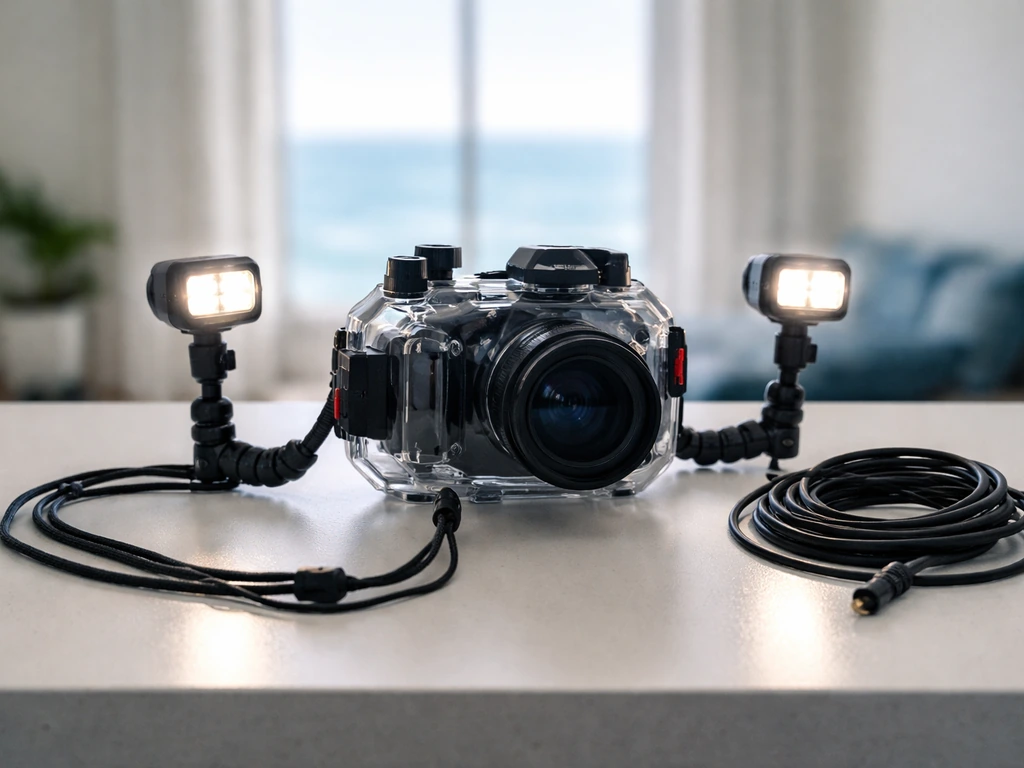
Leigh Webber's LinkedIn profile and business website describe a career arc that begins with a Savannah College of Art and Design education (1993 to 1997), followed by running her own photography businesses. The current flagship is DIVE IN, a luxury underwater portrait service operating in premium travel destinations.
Revenue sources for this type of business typically include per-session portrait fees (which in the luxury market can range from several hundred to several thousand dollars per session), licensing of images, and potentially brand partnerships or editorial assignments. There is no public disclosure of annual revenue, pricing, or profit margins. The business has operated long enough to have established brand equity, reflected in the registered DIVE IN trademark, but trademark registration alone tells you nothing about financial scale.
For the Bondi Treasure Hunter
The WIRED feature describes this Leigh Webber as someone who finds underwater treasure for a living and documents it through a channel, which suggests income from content creation and potentially from the value of recovered objects. Treasure hunting income is highly variable and speculative by nature. EU trademark filings for 'BONDI TREASURE HUNTER' indicate brand development activity, which could generate licensing or merchandise revenue, but no figures are public.
Assets, liabilities, and what's knowable versus what's guesswork

| Category | What's Publicly Available | What Requires Speculation |
|---|---|---|
| Business existence | Yes (LinkedIn, business website, trademark filings) | Revenue, profit, valuation |
| Real estate | Potentially via county property records (Charleston, SC) | Mortgage balances, equity |
| Business equity | No public filings (private business) | Estimated from comparable businesses |
| Personal income | No disclosures found | Inferred from market rates for luxury photography |
| Liabilities | No public court/bankruptcy records found | Unknown |
| Investment accounts | Not disclosed | Unknown |
The honest summary is that for a private individual running a boutique business, almost everything relevant to a net worth calculation is behind closed doors. Property records in Charleston, South Carolina are public, and a determined researcher could look up whether Leigh Webber owns real estate there and what the assessed value is. That would be the single most reliable data point available from public records. Beyond that, you are largely working with assumptions.
How the estimate may have shifted over time
Based on the career timeline that can be reconstructed from public sources, the DIVE IN photographer has been building her brand for roughly 25 to 30 years. Early career years (late 1990s and early 2000s) would have involved establishing a client base and business infrastructure with likely modest income. As the luxury portrait market evolved and destination experiences became premium consumer products, a well-positioned brand like DIVE IN operating in aspirational locations like St.
Barths and Harbour Island would have benefited from rising demand for experiential luxury. The expansion into multiple high-net-worth destination markets suggests business growth over time. That said, photography as an industry has also been compressed by digital commoditization, so the luxury positioning is likely a deliberate and necessary differentiation strategy, not just a passion project. Net worth, if it has grown, has probably grown steadily rather than through any single liquidity event or windfall.
How to verify any number you find and sanity-check the estimate

If you want to do your own research on a real person named Leigh Webber rather than rely on any aggregator's figure, here is a practical verification checklist.
- Check county property records: In South Carolina, property records are public. Search the Charleston County Assessor's database for property owned by Leigh Webber. Assessed value minus any mortgage balance gives you a rough real estate net worth component.
- Look for business filings: South Carolina Secretary of State records can show registered business entities. If DIVE IN is registered as an LLC or corporation, you can confirm the entity exists, but financial statements are not typically filed publicly for small private businesses.
- Search court records: Public court databases can surface bankruptcies, judgments, or liens. The absence of these is a mild positive indicator.
- Check trademark filings: The USPTO database shows active and expired trademarks. A registered trademark like DIVE IN signals active business investment but not financial scale.
- Cross-reference professional profiles: LinkedIn, LensCulture, and similar platforms confirm identity and career history. Consistent identity across platforms raises confidence that you are researching the right person.
- Apply the assets-minus-liabilities test: Whatever number you find online, ask yourself: what assets and liabilities does that number imply? If a site claims a specific figure but gives no breakdown, treat it as fiction.
- Compare to industry benchmarks: Boutique luxury service businesses in the US with a single founder and premium positioning typically generate annual revenue in the range of $200,000 to $1 million, with personal wealth accumulation depending heavily on how much the founder extracts versus reinvests and whether they own real estate.
One broader point worth making: for private individuals who are not celebrities in the traditional sense, celebrity net worth aggregator sites are almost always guessing. In practice, that means any claim about Beverly Watkins net worth should be cross-checked against credible, documented financial sources rather than taken at face value.
The methodology criticism that applies to public figures applies even more severely when the subject has no SEC filings, no entertainment contracts, no studio deals, and no documented media earnings. If you find a specific dollar figure for Leigh Webber on one of those sites, the honest answer is to treat it as illustrative at best and fabricated at worst unless it comes with a documented breakdown.
Many people search for Whitney Webb net worth, but this article explains why you need verified sources before trusting any claimed figure.
A note on similar names and common confusion points
The 'Webber' surname shows up frequently in entertainment and business contexts, which creates confusion. On this site you will find profiles for people like Alli Webb (founder of Drybar) and Beth Webb (interior designer), whose names are phonetically close and sometimes surface in the same searches. If you are instead trying to research what is Alli Webb net worth, check that you are looking at the correct person, since similar-sounding names often get mixed up.
Some searchers may be looking for Beth Webb, which is a different person than Leigh Webber and would require separate verification. None of them are the same person as Leigh Webber. The General Hospital connection is another common confusion point: the Webber family on that show has many members across decades of storyline, but 'Leigh Webber' does not appear to be a prominently documented character name in available GH records.
If you were looking for Heather Webber from General Hospital, that is a fictional character whose actress (Robin Mattson, and more recently Alley Mills) would be the real person with an estimable professional net worth, not the character herself. And Jennifer Leigh Webber, the suspended California Bar attorney, is yet another unrelated person whose name matches this search string.
The takeaway is simple: before trusting any net worth figure you find for 'Leigh Webber,' confirm exactly which Leigh Webber is being described. Identity disambiguation is step one, and most aggregator sites skip it entirely.
FAQ
How can I tell whether the “Leigh Webber net worth” number I found is about the photographer, the treasure hunter, or a fictional General Hospital connection?
Check whether the source mentions Charleston, underwater portrait services (DIVE IN), Australia/Bondi treasure hunting, or General Hospital story details. If the page does not clearly tie the person to at least one concrete identifier, like a business trademark, a location, or a specific TV storyline reference, treat the net worth figure as unreliable and likely misattributed.
Is it reasonable to estimate net worth for the DIVE IN photographer from publicly available data alone?
Only partially. You can improve accuracy by using public real estate records (ownership, assessed value, mortgages if shown in filings) and business registration details where available, but you cannot usually observe private business equity, personal investment holdings, or tax liabilities. So any estimate should be presented as a range with low confidence unless you have more direct disclosures.
What public-record items are most useful if I try to approximate assets for a private individual like Leigh Webber?
Start with real estate (property ownership, assessed values, transfer history), liens or judgments (if recorded), and any visible business ownership indicators (entity filings that list owners or managers). For bank or retirement accounts, expect zero visibility. That limitation is why property data is often the single best anchor point.
Why do net worth websites often show very different numbers for the same person name?
Most differences come from identity disambiguation errors and missing source data. If a site assigns the wrong Leigh Webber to its model, or invents values for assets and liabilities, you will see large swings. Even when the identity is correct, private-individual models often rely on assumptions about income multiple, home value, and discretionary spending.
If Leigh Webber runs a boutique luxury photography business, does “business income” automatically translate into “high net worth”?
Not automatically. You can earn strong annual revenue and still have modest net worth if the business has high expenses (travel, equipment, assistants), low margins, or debt. Also, if profits are reinvested into growth, the personal net worth may lag behind revenue for years.
Can I use her DIVE IN trademark or brand registration to estimate financial scale?
Trademark registration proves branding and intent to use the mark, but it does not provide revenue, profit, or valuation. A better approach is to triangulate from publicly visible indicators such as pricing pages (if any), frequency of client sessions mentioned, partnerships that disclose payment, or volume of published work that can imply throughput.
If the search result is actually about “Heather Webber” or another Webber family figure, what’s the correct interpretation for net worth?
For fictional characters, you cannot compute net worth from the character itself. If you want a financial figure, the target would be the real actor’s compensation or career earnings, not the character’s storyline. Mixing character wealth estimates with real-person net worth creates a category error.
What’s the fastest way to reduce the risk of being misled by aggregator sites?
Treat any single “net worth” number with no documentation of methodology, no cited assets, and no references to filings or transactions as a guess. A practical test is whether the page can explain where each component (property, liabilities, business equity) would come from. If it cannot, assume fabricated or low-rigor estimates.
If I want to do a more credible DIY estimate, what should I do first?
First confirm identity using multiple anchors (business name like DIVE IN, location like Charleston, or specific publicly listed career details). Then collect only verifiable asset inputs, especially real estate and recorded liens. Finally, present net worth as a range, because missing liabilities and private investments will otherwise make your estimate look more certain than it should be.
Does selling underwater treasure or recovered artifacts (for the treasure-hunter identity) make net worth estimates more reliable?
Usually not. Treasure hunting income is often irregular and can involve high uncertainty, expenses, legal constraints, and profit-sharing. Without documented sales records, licenses, and ownership terms for recovered items, any net worth figure is still speculative and should be treated as very low-confidence.
Next Article
Beanie Wells Net Worth 2026: Estimate, Earnings, Assets
Beanie Wells net worth 2026 estimate, earnings, and assets explained with verification tips and public-record checks.