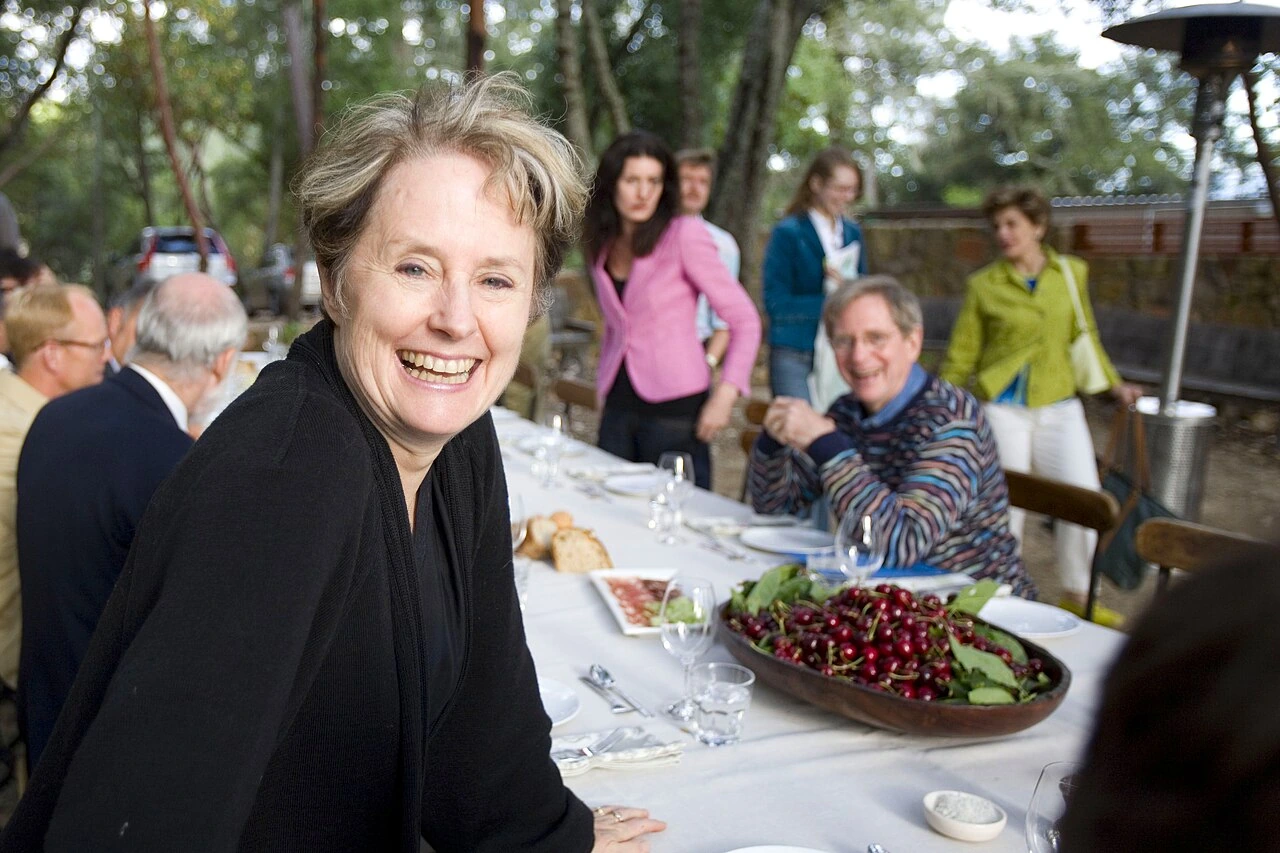
Her wealth story is quieter and more complicated, rooted in a single iconic Berkeley restaurant, a string of influential cookbooks, a robust speaking and media career, and a nonprofit mission that has consumed a meaningful chunk of her time and, presumably, some of her earning potential.
So when you see a net-worth figure attached to her name, understand that it is an estimate of accumulated personal wealth from all of those channels, not a simple salary figure or a valuation of Chez Panisse itself.
The estimated number and what's behind it
The most widely circulated figure comes from CelebrityNetWorth, which pegs Alice Waters's net worth at approximately $10 million. That is the figure you will encounter most often, and it is a reasonable starting point, though it should be treated as an informed estimate rather than a verified balance sheet. Given what is publicly known about her income sources, a range of $8 million to $15 million feels defensible as of 2026.
The lower end accounts for the distributed equity structure at Chez Panisse and significant nonprofit-related expenditures of time and resources. The upper end reflects decades of cookbook royalties, speaking fees, media appearances, and the compounding effect of owning even a minority stake in one of the most famous restaurants in American culinary history.
The single most important thing to understand about her financial profile is the restaurant ownership question. Waters has publicly stated that she owns roughly one-eighth of Chez Panisse. In a 2009 interview, she explained that she had formed a corporation with key employees and distributed shares among insiders over the years. This means that even if you assigned a generous private-market valuation to Chez Panisse, Waters's personal equity would represent only a fraction of that figure. For a fine-dining restaurant with one location and a history of COVID-related revenue disruption (the restaurant sued its insurer over pandemic losses), that equity is real but not transformative on its own.
How her wealth was built, decade by decade
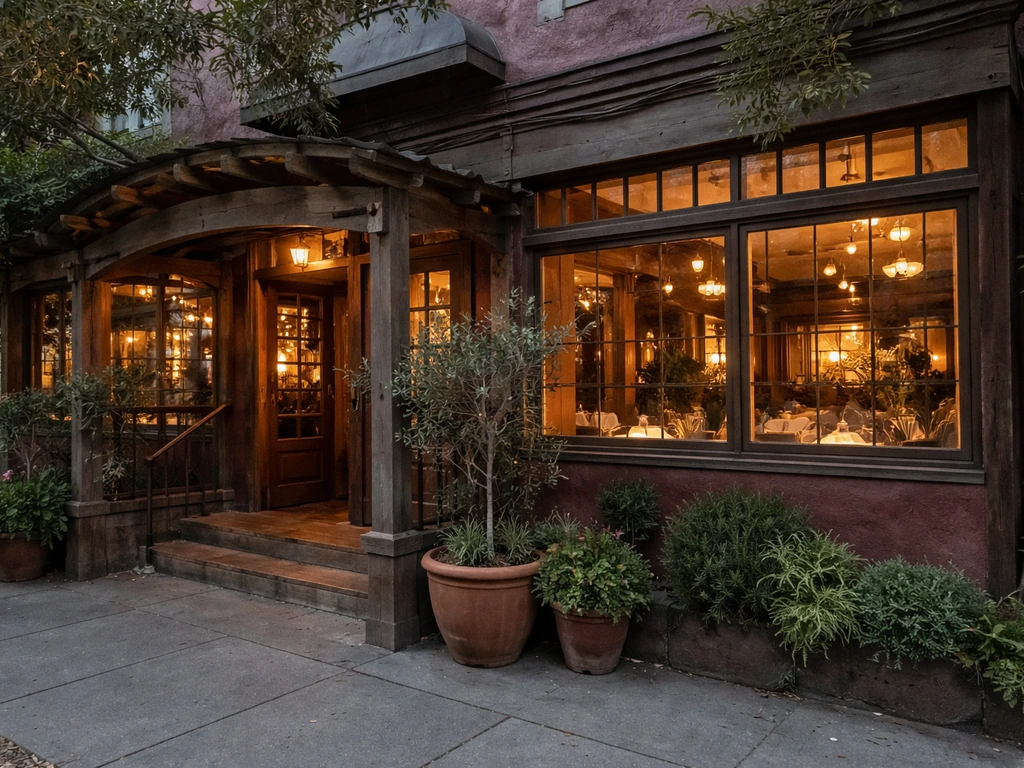
Waters opened Chez Panisse in Berkeley on August 28, 1971, with co-founder Paul Aratow. The restaurant's early years were financially turbulent, as is typical for independent fine dining. The wealth-building story really begins in the late 1980s and early 1990s, when Chez Panisse became a national conversation. By 1992, Waters had won the James Beard Foundation's Outstanding Chef award, and Chez Panisse followed with the Outstanding Restaurant award. Those recognitions are not just trophies: they are the kind of credibility that opens publishing deals, media invitations, and speaking opportunities.
Her cookbook output is a key income pillar that often gets underweighted in casual net-worth discussions. Waters has published more than a dozen books, with titles like "The Art of Simple Food" (2007) and "We Are What We Eat" (2021) reflecting a publishing relationship that has spanned well over three decades. Cookbook royalties are modest on a per-book basis but accumulate meaningfully for an author with a backlist of that size, especially when institutional kitchens, culinary schools, and loyal home cooks keep purchasing older titles. The New Yorker noted the publication of "The Art of Simple Food" as a recent release during a 2008 profile, situating it within a very productive writing phase for Waters.
The 1990s and 2000s also saw her develop a media and speaking profile that added reliable income. She has appeared in documentaries, television segments, and food-world programs over the years, with credits documented across film and TV databases. The James Beard Foundation recognized her Humanitarian of the Year in 1997 and gave her a Lifetime Achievement Award in 2004 and a Leadership Award in 2011, each milestone reinforcing her public standing and, practically speaking, her market rate as a speaker and brand collaborator.
Her speaking career remains active. As of late 2025, Waters is listed as an available keynote speaker through major booking agencies, though those agencies do not publish her fee. For a figure of her stature in the food world, keynote fees typically range from $20,000 to $50,000 per engagement, and she appears to accept a selective number of these per year. That is not a fortune on its own, but stacked over many years it adds up.
In November 2021, Waters expanded into a new operational venture when Lulu opened inside the Hammer Museum in Los Angeles. Conceived with Waters and led by chef David Tanis, the restaurant represents her first Los Angeles presence and a later-career income and brand asset, though the exact nature of her financial stake in Lulu is not publicly disclosed.
Assets and lifestyle signals
Waters lives in Berkeley, California, which is relevant context because Bay Area real estate has appreciated dramatically over the decades she has lived there. If she owns her residence, which has never been publicly contradicted, that property alone could represent several million dollars in net asset value depending on when it was purchased and its location. Berkeley and the surrounding area have seen average home prices well above $1 million, and properties associated with long-term owners in desirable neighborhoods can be worth considerably more.
Beyond real estate, her identifiable assets are tied primarily to her equity stake in Chez Panisse (that roughly one-eighth share), her involvement in Lulu at the Hammer, and her intellectual property in the form of cookbooks and the Chez Panisse brand. She does not appear to have diversified into consumer product lines, restaurant franchises, or investment vehicles in the way that some of her celebrity chef contemporaries have. Her brand energy has gone into the Edible Schoolyard Project, a nonprofit she founded in 1995, which is a mission-driven use of her platform rather than a personal wealth vehicle.
It is worth noting that the Edible Schoolyard Project and the Alice Waters Institute have faced reported budget challenges and staff turnover as recently as September 2024. This matters for net-worth estimation because it suggests these organizations may require ongoing financial attention or governance involvement from Waters, which is an opportunity cost at minimum and could involve personal financial commitments in some scenarios, though nothing public confirms direct personal subsidization.
Where she stands financially in 2026 versus her peak earning years

Waters is 82 years old as of 2026, and her financial profile reflects a person in a later stage of a career rather than a peak-accumulation phase. Her highest-earning years were probably the late 1990s through the mid-2010s, when cookbook advances and royalties were strongest, speaking demand was high, and Chez Panisse was operating at full capacity with its reputation at its most commercially potent. The COVID pandemic was a genuine financial setback: Chez Panisse closed for an extended period, the restaurant entered a dispute with its insurance company over pandemic-related losses, and the broader fine-dining category took a hit that it has only partially recovered from.
On the income side, 2024 brought a notable if non-personal financial event: Waters was named the tenth recipient of the Julia Child Award in May 2024, and the accompanying $50,000 grant was directed to the Edible Schoolyard Project rather than to her personally. That detail is instructive. It shows that Waters continues to receive high-profile recognition that keeps her name and brand active, but the monetization of that recognition flows toward her nonprofit work rather than her personal accounts. She continues to appear on PBS programs, food media, and at regional culinary events, maintaining a media presence that supports ongoing speaking and appearance income, even if the volumes are lower than they were a decade ago.
How net worth estimates like this one are put together
Celebrity net worth figures are not derived from tax returns or bank statements. They are constructed estimates, and understanding how they are built helps you evaluate how much confidence to place in any given number. The typical methodology combines several types of inputs: reported or estimated earnings from primary career activities (in Waters's case, restaurant ownership income, cookbook advances and royalties, speaking fees, and media appearances), inferred asset values based on publicly known holdings (real estate in known geographic markets, business equity stakes), and industry benchmarks that allow estimators to fill in gaps where direct data is unavailable.
For Waters specifically, the data quality is mixed. The Chez Panisse equity fraction is documented via her own public statements, which is unusually direct sourcing. Cookbook publication timelines and award histories are verifiable. But actual restaurant profitability, speaking fees, royalty rates, and real estate valuations are all inferred. Sites like CelebrityNetWorth explicitly rely on this kind of inference, which is why their figures should be treated as best estimates with a meaningful margin of error, not audited figures. For someone like Waters, whose wealth is privately held and not subject to SEC disclosure requirements, the true number could be somewhat higher or lower than the $10 million headline figure.
If you want to cross-check any estimate you find, the most useful sources are: California property records (searchable online for real estate values), any published interviews where Waters discusses business structure or earnings directly, Chez Panisse's BBB business profile and any available corporate filings, and the nonprofit tax filings (Form 990) for the Edible Schoolyard Project and Alice Waters Institute, which are public documents that reveal organizational finances even if they do not show personal compensation directly. ProPublica’s Nonprofit Explorer hosts the Edible Schoolyard Project’s federal nonprofit financial filings (Form 990 data) nonprofit tax filings (Form 990) for the Edible Schoolyard Project.
Putting Waters in context against other prominent chefs and food personalities helps calibrate the $10 million estimate. The food world has a wide wealth distribution, and Waters sits in a distinctive middle tier: more financially substantial than most critically respected independent restaurateurs, but far below the celebrity-chef billionaires and multi-concept empire builders.
| Figure | Estimated Net Worth | Primary Wealth Driver |
|---|
| Alice Waters | $8M–$15M (est.) | Chez Panisse equity (minority), cookbooks, speaking |
| Thomas Keller | $100M+ (est.) | Multi-restaurant empire, French Laundry brand, licensing |
| Gordon Ramsay | $220M+ (est.) | TV empire, global restaurant group, brand licensing |
| Emeril Lagasse | $70M+ (est.) | TV shows, product lines, restaurant group |
| Nobu Matsuhisa | $200M+ (est.) | Global restaurant chain, hotel brand |
| Dan Barber | $5M–$10M (est.) | Blue Hill restaurants, books, speaking, no major TV presence |
The comparison that is probably most instructive is Dan Barber, another critically acclaimed, single-restaurant-anchored American chef with a strong publishing and speaking profile and a mission-driven nonprofit dimension. Both occupy a similar wealth bracket, which suggests the $8M–$15M range for Waters is consistent with what this type of food career generates without a major TV or licensing windfall. The chefs with dramatically higher net worths, like Gordon Ramsay or Nobu Matsuhisa, built those figures through scalable branded businesses, television royalties, or global franchise models that Waters never pursued.
It is also worth noting that the music world offers an interesting parallel for how family and estate networks can affect net worth narratives over time. Figures like Amy Winehouse's estimated net worth were shaped not just by earnings but by posthumous royalties and estate structures, and similar complexities apply to any public figure whose intellectual property and brand outlive their most active career phase. Waters's cookbooks and the Chez Panisse name are assets that will continue generating value long after she steps back from active management.
If you search for Alice Waters's net worth across multiple sites and get different numbers, that is normal and expected. The variation reflects different assumptions about Chez Panisse's private market valuation, Waters's share of that value, and how aggressively the model treats her speaking and publishing income. A figure anywhere between $5 million and $20 million would not be obviously wrong given available public information. The $10 million consensus figure from aggregator sites is a reasonable central estimate, but treat a 40% margin of error in either direction as appropriate for a privately held wealth profile of this type.
The most important thing to remember is that none of these figures are confirmed by Waters herself or by any disclosed financial document. They are models, and models reflect the assumptions of the people who built them. What is not speculative is the career foundation: 55 years running one of America's most influential restaurants, more than a dozen published cookbooks, a 2024 Julia Child Award, an active speaking presence through at least late 2025, and a brand that has shaped American food culture in ways that are genuinely difficult to overstate. Whether the resulting personal wealth lands closer to $8 million or $15 million, the story of how it was built is more interesting than the number itself.
For readers interested in how wealth profiles are constructed for other figures whose financial lives are similarly opaque, the methodology used for someone like Alice Wahome's net worth follows the same general framework: documented income sources combined with inferred asset values and industry benchmarks, with confidence levels that vary depending on how much the subject has disclosed publicly. And for context on how music-world estates function differently from food-world brands, a look at Mitch Winehouse's financial profile or Alex Winehouse's estimated net worth illustrates how secondary figures in a famous person's orbit develop their own documented wealth narratives. Similarly, emerging figures in other entertainment niches, such as the profile of West Love's singer age and net worth, show how earlier-career wealth estimates are constructed with even less data and greater uncertainty than a figure like Waters, whose decades-long paper trail at least gives estimators something concrete to work with.