The reason her net worth estimates vary so widely comes down to one central fact: Australia Zoo is a private business. Its financials are not publicly audited in the way a listed company's would be, and Terri's personal ownership structure, compensation arrangements, and liabilities are not disclosed in any verified public document. Everything you read online is an estimate built from observable inputs, not a balance sheet. That is not a criticism of any particular site; it is just the reality of valuing private-company stakes, which are the largest and most opaque component of most privately-held celebrity fortunes.
The direct answer: what is Terri Irwin's estimated net worth right now?
The most widely circulated figure is $20 million USD. Celebrity Net Worth, which is the most frequently cited celebrity wealth aggregator on this topic, reports that single number without publishing a detailed methodology. A handful of other outlets pick up that figure and repeat it, which is why you see it so consistently across search results. A more conservative range, accounting for the uncertainty around private-company valuation and unknown liabilities, would place her estimated net worth somewhere between $10 million and $30 million USD as of 2026. The $20 million figure sits in the middle of that range and is a reasonable working estimate, but it should be treated as exactly that: a working estimate with moderate confidence, not a confirmed asset statement.
For comparison, Terri Irwin's net worth has been explored from multiple angles across different research approaches, and the $20 million consensus holds up as the most defensible central point even when methodologies differ. It is consistent with the scale of operations attributed to Australia Zoo and the multi-decade income streams she has maintained.
Net worth, in its most basic form, is assets minus liabilities. For a private individual with no legal obligation to disclose finances, estimators work backward from what is observable: known business ownership, documented income sources like TV deals and book royalties, property records, and comparable industry data. The result is always an approximation, not an audit.
For someone like Terri Irwin, whose primary asset is likely an ownership stake in a private zoo and related business operations, the valuation problem is especially acute. Private-company stakes are notoriously difficult to value because they depend on assumptions about revenue, profit margins, debt levels, and growth prospects that are not publicly available. This is a well-documented issue in wealth estimation generally: capital structure details for unlisted entities are frequently opaque, and two analysts using different revenue multiples can produce wildly different valuations from the same observable facts. That is a large part of why you will see Terri Irwin's net worth cited anywhere from the low tens of millions to figures above $40 million on less rigorous sites.
Some estimators, like the analytics-focused site Hafi, approach the problem through social media income projections and platform analytics, then extrapolate a net worth figure from those earnings estimates. That is a legitimate supplementary data point, but it is a very different methodology from an assets-based approach. A social-media-income model captures one revenue stream but says nothing about the value of a zoo property, land holdings, or accumulated savings. Neither approach is wrong; they are just answering different questions, and the outputs should not be compared directly without acknowledging that difference.
Where her money actually comes from
Terri's income and wealth-building story runs through several distinct channels, all of which are interconnected by the Australia Zoo and Irwin family brand.
Australia Zoo operations
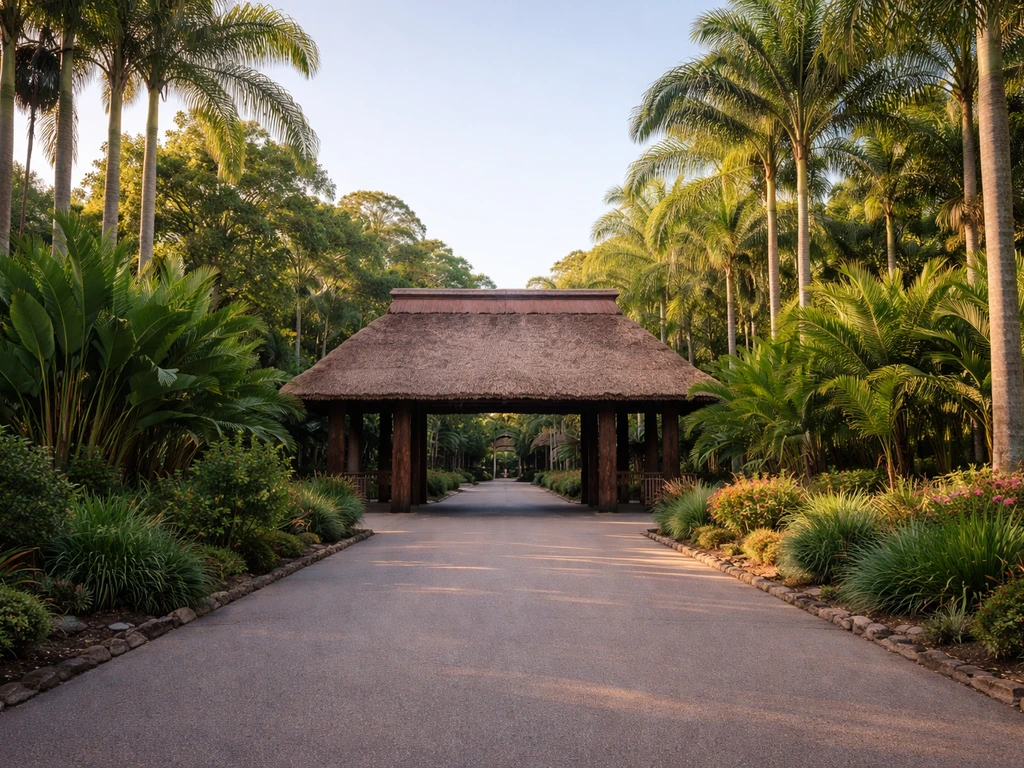
As the named sole owner and chairwoman of Australia Zoo, Terri's single largest wealth asset is almost certainly her ownership stake in the zoo itself. Australia Zoo is one of Australia's most prominent wildlife parks and has significant land holdings in Queensland. An ABC News report from 2011 confirmed Terri's role as director and showed she was actively involved in financial and operational decisions. The zoo generates revenue through visitor admissions, merchandise, event hosting, and educational programs. Land value alone, given the size of the property in the Sunshine Coast hinterland, represents a substantial asset on any balance sheet.
The Irwin family's wildlife documentaries were instrumental in bringing Australia Zoo to global prominence, and that media presence has continued since Steve's death. Terri holds a lead role in 'Steve Irwin's Wildlife Warriors' and has been involved in 'Crikey! It's the Irwins,' a series that follows the family's work at the zoo and has aired on Animal Planet. Long-running TV series generate income through production fees, licensing, and syndication. While the exact compensation terms are not public, multi-season television involvement at this scale is typically a meaningful income line item for the talent involved.
Publishing and brand licensing

Terri is a published author with an official page at Simon & Schuster Australia, which identifies her as the owner of Australia Zoo. Book royalties from wildlife and conservation titles are not enormous income drivers on their own, but they contribute to brand maintenance and visibility, which in turn supports the zoo's commercial appeal. Brand licensing tied to the Irwin name, whether through merchandise, media partnerships, or endorsements, is another category that can add meaningfully to income over time, though specific deal terms are not publicly disclosed.
Wildlife Warriors and conservation work
Wildlife Warriors was co-founded by Steve and Terri in 2002. Terri serves as Australia Zoo Chair on the organization's board of directors. Wildlife Warriors is structured as a company limited by guarantee, meaning it is a nonprofit-adjacent entity, and conservation work through this channel would not directly contribute to personal net worth in the way commercial income does. However, the organization's visibility and the Irwin brand's association with it reinforces the commercial value of the overall Irwin ecosystem.
Assets and business stakes shaping the overall picture
When you try to build even a rough balance-sheet picture of Terri Irwin's wealth, the likely categories look something like this:
- Ownership stake in Australia Zoo (private business; land value and operational value combined, not publicly disclosed but almost certainly the largest single asset)
- Real estate and personal property (private, not confirmed in public records reviewed here)
- Accumulated savings and investments from approximately 20 years of zoo and media income
- Royalties and licensing income streams from publishing and brand deals
- TV production fees and talent payments from ongoing series appearances
- Personal liabilities (mortgage, operational debt tied to the zoo, tax obligations) which reduce gross asset value but are not publicly itemized
The zoo's land and infrastructure value is the factor that creates the most uncertainty. Queensland land values have appreciated significantly over the past decade, and a wildlife park of Australia Zoo's scale could represent tens of millions in property value alone, separate from its operational business value. If estimators are using a conservative land-plus-operations figure, you get a lower net worth estimate. If they are applying a higher revenue multiple or factoring in appreciated land values, the number climbs. Neither is wrong; they are just different assumptions about an unverified asset.
Why the numbers differ across sites and how to check them
The core reason you see different figures for Terri Irwin's net worth across different websites comes down to three things: different assumptions about Australia Zoo's value, different methodologies (income-based vs. assets-based), and the basic tendency of content sites to copy and slightly modify whatever figure is already ranking well in search results.
Celebrity Net Worth reports $20 million as a single figure with no published balance-sheet breakdown. Yahoo and similar aggregators pick up that number and sometimes add context from other sources, like Australian Financial Review reporting on the zoo's financial position, but these are not independently audited Terri-specific asset valuations. Distractify and similar lifestyle outlets draw on those same secondary sources and combine them with family net worth speculation without clear methodology. None of this makes the $20 million figure wrong; it just means you should treat it as an informed estimate rather than a verified disclosure.
To verify or update any figure you find, the most useful approach is to cross-reference at least two or three sources with different methodologies, note whether the figure is income-based or assets-based, check the publication date (net worth estimates become stale quickly), and look for any primary sources like company filings, property records, or official statements. Australia Zoo Wildlife Warriors Worldwide Ltd is registered as a limited by guarantee unlisted public company, so some corporate governance records are accessible through Australian company registration databases, though personal equity positions are not disclosed there.
If you are researching this topic alongside other public figures' finances for comparison purposes, it helps to look at wealth profiles from similarly structured cases. For example, Fredricka Whitfield's net worth illustrates how a long-running media career builds wealth through a combination of salary income and accumulated assets, which is a useful parallel for understanding the media side of Terri's income story.
How her wealth was built over time
Terri's financial story does not start with Steve Irwin's death. She was already deeply involved in the business and media operations of Australia Zoo well before 2006. The Irwin brand built significant commercial momentum through the 1990s and early 2000s as Steve's Crocodile Hunter series became a global phenomenon. Wildlife Warriors was founded in 2002, and the zoo was already a major Queensland tourism destination by the mid-2000s. That baseline is important because it means Terri inherited a functioning, revenue-generating enterprise, not a startup.
After Steve's death, Terri was named blank" rel="noopener noreferrer">sole owner and chairwoman of Australia Zoo. The period from 2007 to 2011 appears to have been financially challenging, as suggested by the ABC News reporting in 2011 about financial pressures at the zoo. In a June 24, 2011 report, ABC News quoted Australia Zoo owner Terri Irwin saying there were no plans for further staff redundancies at Australia Zoo at that time blank" rel="noopener noreferrer">ABC News reporting in 2011 about financial pressures at the zoo. But the Irwin family's continued television presence, including the launch and run of 'Crikey! It's the Irwins,' kept the brand active and the zoo's global profile high through the 2010s into the 2020s. Bindi Irwin's own growing public profile, including her 2015 'Dancing with the Stars' win and subsequent media work, added a new revenue and visibility layer to the family ecosystem. You can dig into what is Bindi Irwin's net worth for a fuller picture of how the next generation's earnings fit alongside Terri's.
The trajectory over roughly 20 years looks like this:
| Period | Key Financial Events | Estimated Wealth Direction |
|---|
| Pre-2006 | Australia Zoo growing, Crocodile Hunter at peak popularity, global TV deals | Building |
| 2006-2011 | Steve's death, Terri takes full ownership, reported financial pressures at zoo | Uncertain / Stabilizing |
| 2011-2018 | Zoo rebounds, Crikey! It's the Irwins launched, Bindi's media profile rises | Growing |
| 2018-2026 | Continued TV presence, Wildlife Warriors visibility, Queensland land appreciation | Steady to Growing |
The overall arc is one of a business-owner who managed a difficult transition period and emerged with a durable, multi-stream income model. That kind of sustained operation over two decades, even without explosive growth, tends to produce the kind of accumulated wealth that supports a $15 to $25 million net worth range.
Practical takeaways and where to check for updates
Here is the clearest summary of what we know with reasonable confidence and what remains unverified:
- Best-supported estimate: $20 million USD, with a realistic range of $10 to $30 million depending on how you value Australia Zoo's private business stake
- Confidence level: moderate. The $20 million figure is consistent across major estimators but is not backed by an audited balance sheet or public disclosure
- Largest driver of uncertainty: Australia Zoo's private ownership structure and the absence of disclosed financials for the business
- Most reliable observable income streams: zoo operations, ongoing TV/streaming series involvement, brand licensing, and publishing royalties
- What is not confirmed: personal property holdings, specific compensation from zoo or TV deals, total liabilities, and any offshore or investment assets
If you want to track updates to this figure over time, the most useful sources to monitor are Celebrity Net Worth for the consensus figure, Australian business registration databases for corporate changes at Australia Zoo, and entertainment industry reporting for any new TV deals or media contracts the Irwin family announces. Property transaction records in Queensland can sometimes surface major real estate moves, though personal residences are not always publicly indexed in an easily searchable way.
It is also worth putting Terri's estimated wealth in context by looking at how other figures in adjacent spaces are valued. For instance, Perrion Winfrey's net worth shows how emerging public figures in different industries accumulate early-career wealth, which highlights the contrast with someone like Terri who has spent decades building value through a single flagship asset rather than diversifying early. Similarly, looking at how athletes-turned-media figures build their profiles, such as in the case of Winifer Fernandez's net worth, offers a useful counterpoint about how different wealth-building timelines and asset mixes produce very different net worth trajectories.
The bottom line is that Terri Irwin is not simply a celebrity widow with a passive inheritance. She is a working business owner with a multi-decade track record of managing a major wildlife brand. The $20 million estimate reflects that, even if the exact figure will remain an approximation until Australia Zoo's private financials are ever made public, which is unlikely in the foreseeable future. Use the range of $10 to $30 million as your bracket, $20 million as your working central estimate, and treat any figure significantly above $30 million with healthy skepticism unless new verified disclosures emerge.